
Meet StreamCrate: The DIY Portable Media Server Built on Raspberry Pi
For years, maker Daveed Walzer relied on a trusty 2TB WD My Passport Wireless Pro to carry his entertainment on the go. Purchased back in 2017, the grapefruit-sized device was his ultimate travel companion—streaming movies via Plex to his tablet or hotel TVs while he was out remote-working in the French Alps.
But as time went on, the device’s limitations caught up with him. The 2TB capacity was no longer enough for his growing collection, and the firmware forced him to use Plex when he preferred Jellyfin for local, offline playback. Even worse, it lacked a physical HDMI port, meaning if he ever forgot his Chromecast puck, he was locked out of hotel TVs entirely.
Building a Better Alternative
After a successful weekend project building a multiroom audio system with a Raspberry Pi 3, Daveed decided to look into a modern DIY replacement. He consulted AI to see if a Raspberry Pi could replicate and upgrade his old wireless drive. The AI said yes, estimating a budget of around $200.
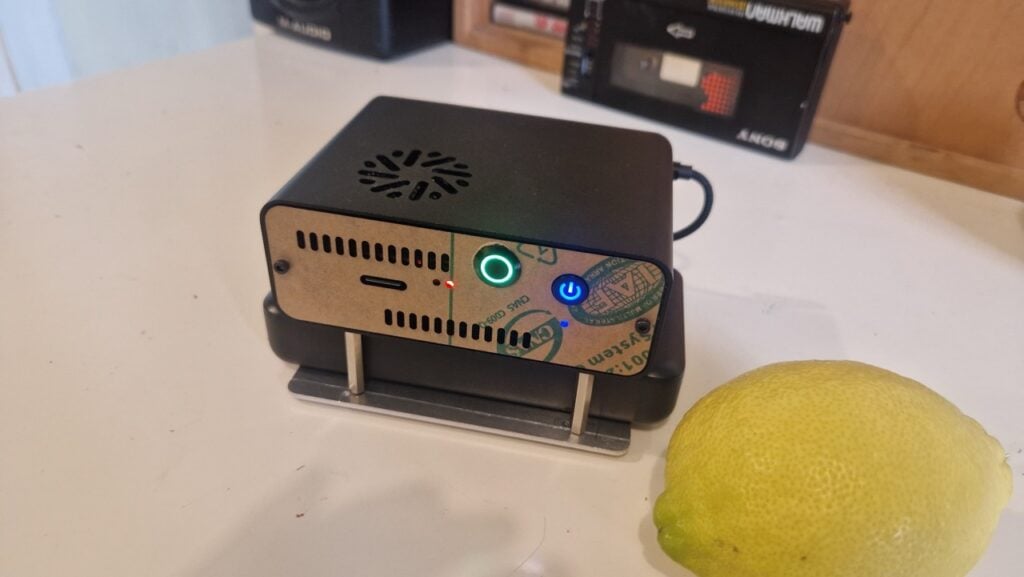
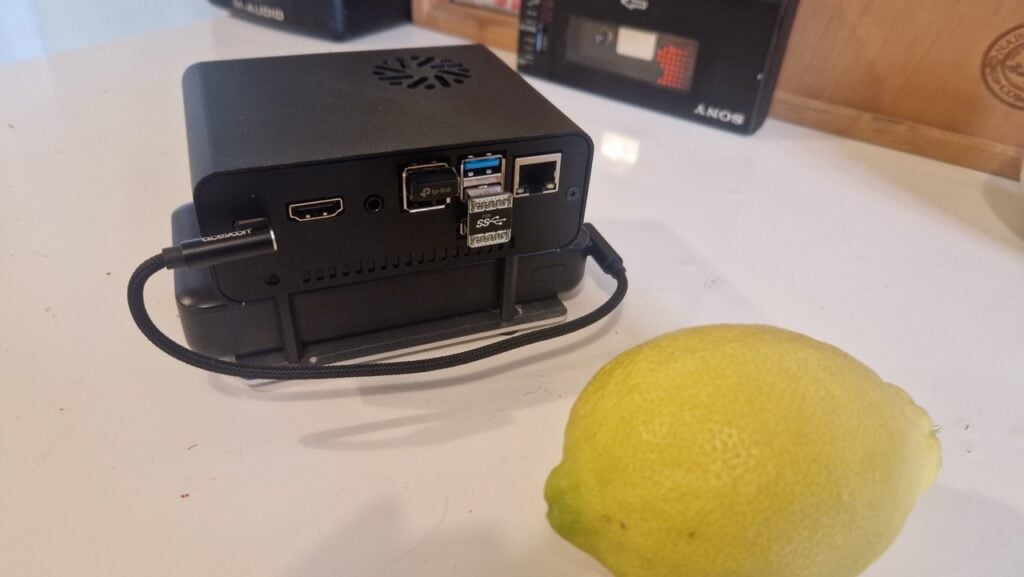
The real catalyst for the project, however, was finding a compact Geekworm Raspberry Pi 4 NAS enclosure equipped with a built-in 2.5-inch SATA hard drive bay. Paired with a massive 5TB hard drive, a 20,000mAh power bank, and an external USB Wi-Fi adapter, the StreamCrate was born.
Running Raspberry Pi OS Lite, the pocket-sized server packs a serious punch. It can function completely offline as a Wi-Fi hotspot, streaming media directly to nearby devices via Jellyfin. It also features a physical shutdown button and an Amazon Fire TV stick remote for easy navigation. Best of all, it offers up to ten hours of battery-powered playback and automatically launches Kodi the moment it detects an HDMI connection.
Overcoming the Hurdles
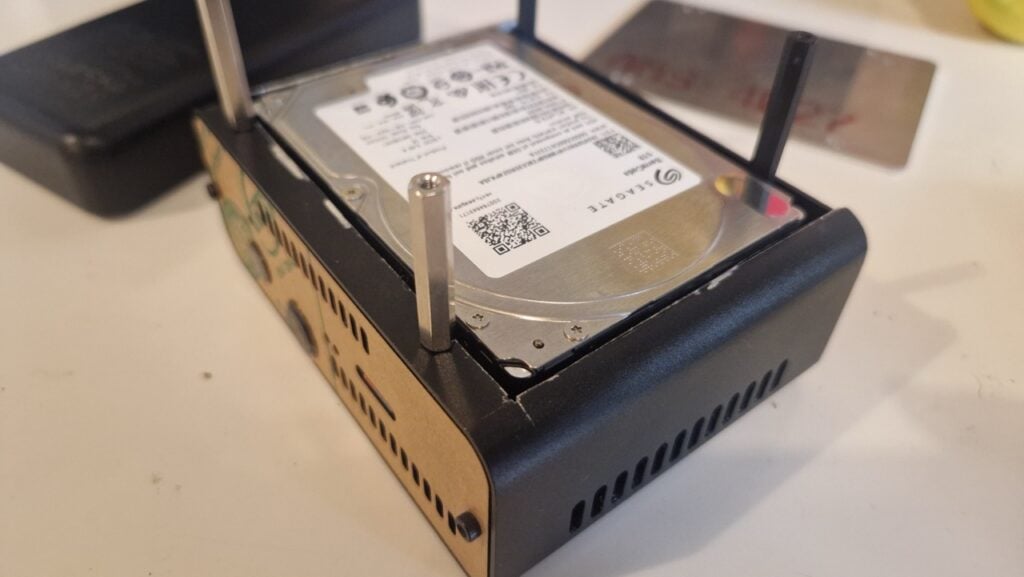
The build wasn’t without its engineering challenges. First, the 5TB hard drive was physically too thick to fit into the standard Geekworm enclosure, forcing Daveed to physically cut the aluminum case and fabricate a custom baseplate.
The software presented an even bigger obstacle. Because the Raspberry Pi 4 serves as both the server and the video player when plugged directly into a TV via HDMI, it struggled with specific high-end video formats. "Raspberry Pi 4 cannot directly play some media encodings—with 10-bit depth and 4K H.264 being the key examples," Daveed explained. An audit of his media library revealed that 20% of his files were unplayable through Kodi on the Pi.
To solve this, he had to set up an automated background conversion system. Using Tdarr transcoder running inside a Docker container on his main home NAS, the system now automatically transcodes incompatible files into Pi-friendly formats before syncing them to the StreamCrate.
The Ultimate Travel Companion
Despite the technical hurdles, the final result is a massive success. The StreamCrate gives Daveed a fully synced, offline mirror of his home media library that works anywhere in the world.
Whether he is plugging directly into a TV or winding down in a camper-van after a day of outdoor adventures, he now has his entire library at his fingertips, ready to play on practically any screen.